After several days of snow — welcome moisture for plants in winter, when irrigation is turned off — the day dawned clear, cold, crystalline. More of the same is forecast the next few days.
I enjoy living in a rural area where I can grow fruits and vegetables. But I love to see what urban farmers are accomplishing using only the space of a city or suburban lot. Blogger Ro Kumar makes an interesting case for why urban farming is not merely a good thing, but the most important movement of our time. Read what he has to say.
In the same vein, this amazing video shows what one family in Los Angeles produces on their lot.
Posted in Vegetables | Tagged tomatoes, vegetables | Leave a Comment »
This first season of Smith Rock Farm has been an experiment on a lot of different levels: trying new (to me) techniques, new varieties, and most importantly, a new lifestyle. Results? Mixed. More successes than failures. It feels good to be able to bring my horse to my own barn and feed him hay that I grew, and to know the barn is full with enough to feed him until next summer’s cuttings. It was satisfying to be able to sell my organic produce. Surprising that I was the only vendor at Central Oregon Locavore selling tomatoes. Next year I’ll plant even more tomatoes. I look forward to serving my own potatoes, squash and carrots on Thanksgiving.
Most of all I’ve loved being in control of my own time, being able to work on my priorities rather than an employer’s. Although it’s only been three months since I quit my job, it’s been the happiest three months of the year.
Posted in Hay, Vegetables | Tagged hay, tomatoes, vegetables | Leave a Comment »
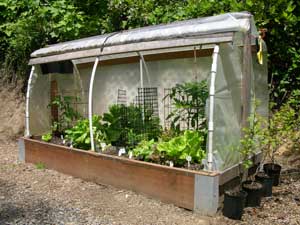
A garden cloche to protect frost-sensitive plants is much easier to build and far less expensive than a greenhouse. Photo courtesy of Oregon State University Extension Service.

If they are mature enough, green tomatoes can be ripened indoors. Photo by Judy Scott, OSU Extension Service.
Posted in Climate, Our farm products, Vegetables | Tagged tomatoes, vegetables, weather | Leave a Comment »
I’m more tired physically these past weeks since I quit my job to devote my energy to growing hay and produce. Planting, weeding, shoveling, moving rocks. It’s a workout with no gym fees. But it’s not all work. There’s plenty of play too.
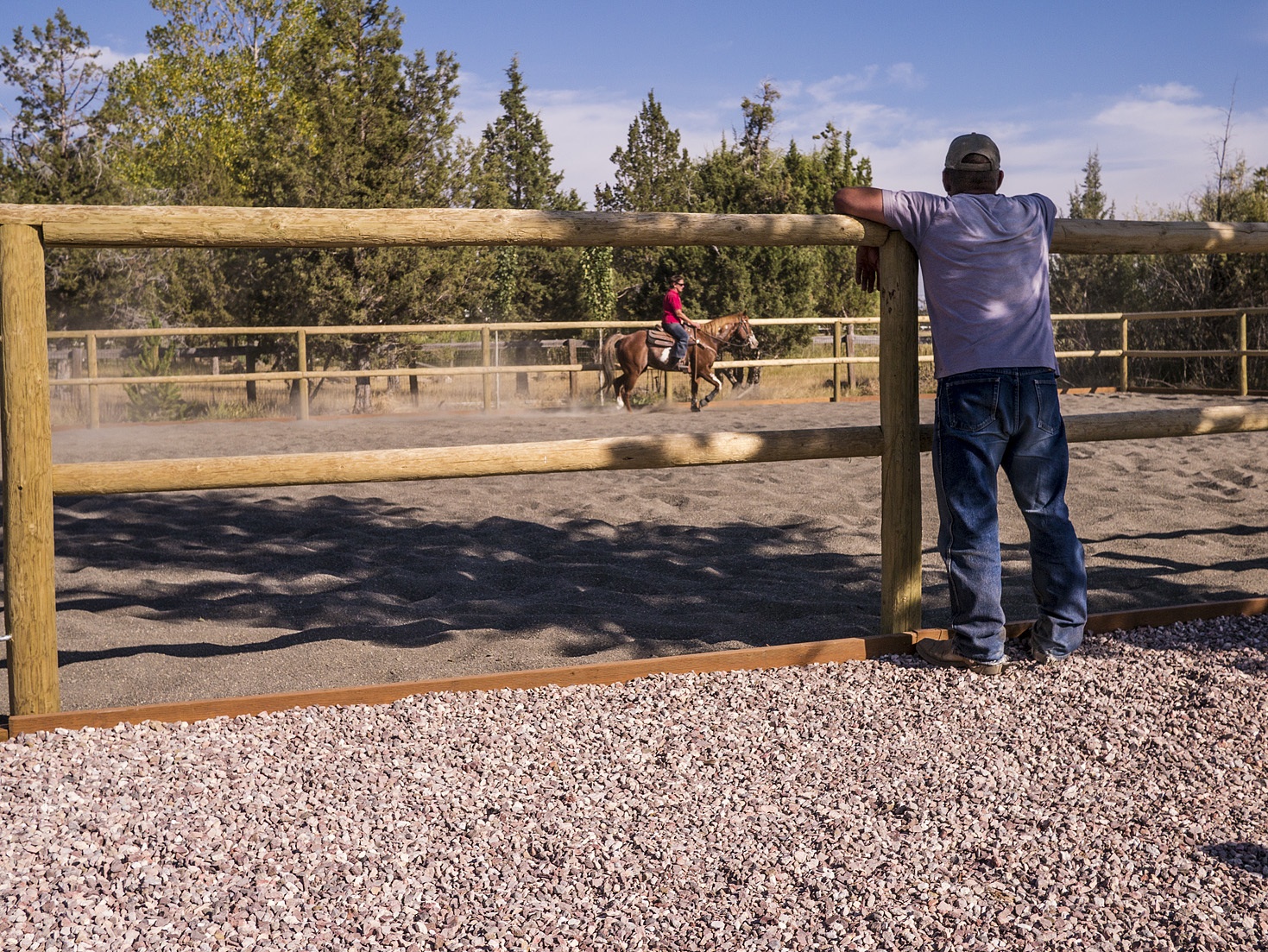
Yesterday my horse Dusty and I enjoyed a lesson with trainer Tim Rawlins of Rawlins Reining Horses in Terrebonne, OR.
Posted in Horses | Tagged riding | Leave a Comment »
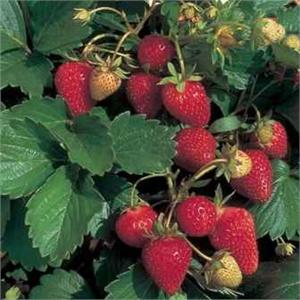
Hecker strawberries
Posted in Our farm products | Tagged strawberry | Leave a Comment »
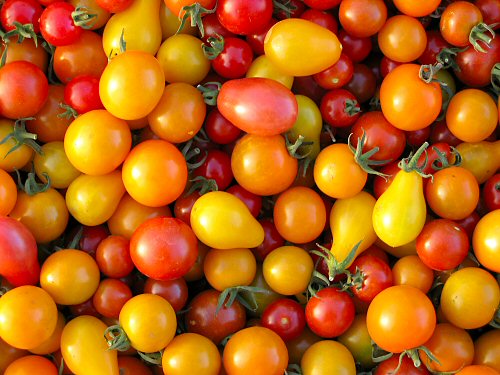
We sell a mixture of cherry tomato varieties including Sun Gold, Juliet and Yellow Pear.
Posted in Vegetables | Tagged tomato varieties, vegetables | Leave a Comment »
I’m off to Central Oregon Locavore to deliver produce that’s been ordered online. Every other Thursday is pick-up day. I think it’s a great system for both producers and consumers. The advantage for producers is that they simply list what they have, in what quantities; there are no specific commitments, no need to have someone staffing the farmer’s markets instead of working on the farm. For consumers, they order only what they want from more than 100 different local producers, unlike in a CSA where you don’t know in advance what the weekly box from the producer will contain and may find you get vegetables you don’t like or don’t know how to cook.
Posted in Vegetables | Tagged l, vegetables | Leave a Comment »
How does it happen? One day you have a not-quite-ready-to-harvest zucchini. Then seemingly overnight it grows into a “baseball bat.”
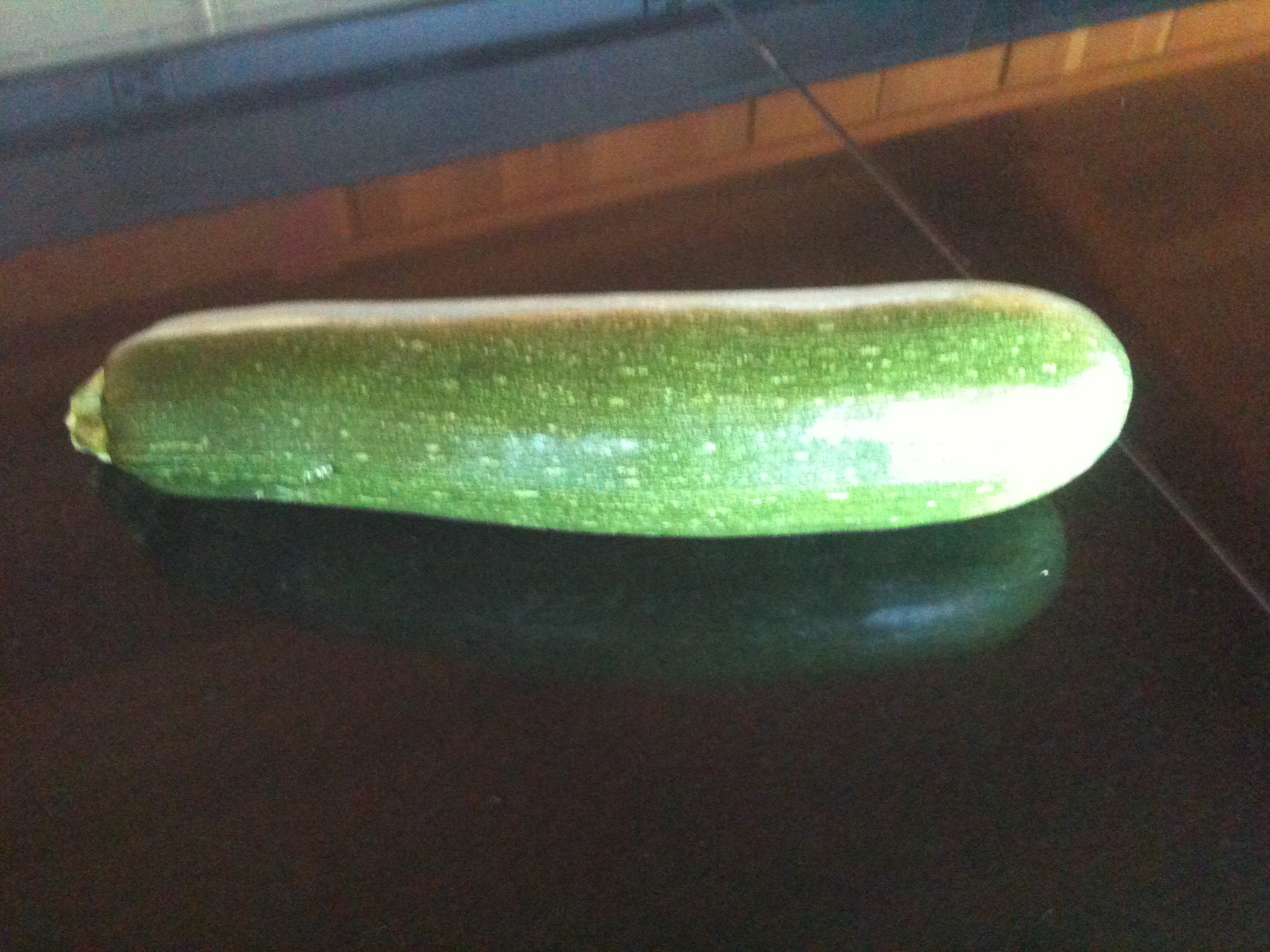
Oh no! Today I discovered this “baseball bat” zucchini hidden under some leaves.
Too big to be tender, bats are a big problem. Recently we discovered a delicious solution. Turn the bats into boats filled with croutons, tomatoes, fresh mozzarella, pine nuts and pesto. Voila! Tasty vegetable dish for four, or maybe six if you’ve got a REALLY big bat. Try this recipe, we love it.
Posted in Vegetables | Leave a Comment »
June-bearing berries (in our area, make that July) are said to be sweeter than the everbearing varieties. We grow Quinault everbearing and they do have a bit of tartness that personally I like. Enjoyed them with breakfast this morning.
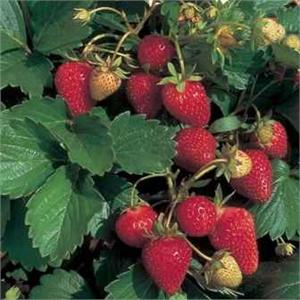
Hecker is a day-neutral variety developed at the University of California at Davis. Photo courtesy of Sakuma Bros. Farm. You can order this variety from them. Click photo to go to the ordering page.
Posted in Our farm products | Leave a Comment »
 Smith Rock Farm